Programs

Filter

Michigan Recreation Adventure Leadership Team programs are great for work teams, community organizations, and student groups—any group who wants to learn, grow and have fun. Our experiential education philosophy allows everyone to engage at their own pace and comfort level. Our programs can focus on physical challenges or activities that are more based on strategy and collaboration. All programs are customized specifically for your groups’ interests and skill level.
Competencies: Building Relationships, Meaning-Making, Resilience
Semester: Fall, Spring, Summer, Winter
Audience: All Students, Graduate Students, Student Organizations, Undergraduates
Adventure Leadership is an outdoor, activity-based, experiential learning and leadership development program. You will guide trips and facilitate team building programs, providing participants opportunities to explore leadership, organizational behavior, group development, and the environment using adventure education practices and outdoor recreation principles. In addition to hands-on experiences, you will design and complete a project of your own that takes into account your unique strengths, passions, and ambitions. For example, your project might address underserved populations; build a relationship with a key stakeholder; or create a new exercise, element or initiative for team building. No matter what your career aspirations may be, the skills and experience gained during this internship will be powerful and highly valued in all areas of your life, personal or professional.
Competencies: Adaptability, Building Relationships, Facilitation, , Meaning-Making, Resilience
Semester: Fall, Spring, Summer
Audience: All Students, Graduate Students, Undergraduates
Leadership isn’t about titles, it’s about action, connection and collaboration. This course helps students discover how meaningful leadership often happens without formal authority. Through real-world case studies, peer interaction, and systems-focused thinking, students will learn how to influence outcomes, build trust, and initiate change even when they’re not “in charge.” This course is especially valuable for students leading from less visible roles or within systems that feel rigid. It culminates in the creation of a personal influence plan tailored to a real-life context they care about. By the end of this course, students will be able to: Define leadership as influence, not position, and identify real-life opportunities to lead without formal authority, Develop strategies for initiating change in complex systems or groups where they lack direct power, Build policy and systems awareness, recognizing how informal power, credibility, and networks can be used to shape outcomes, Explore their identity and confidence in stepping into leadership roles that are less visible, less central, or less traditional, and Create a personal influence plan that outlines how they will take initiative and create impact in a specific area of their life.
Semester: Fall
Audience: Undergraduates
This 1-credit Leadership Lab will help students: Work with a group to identify important issues, brainstorm small win solutions, implement ideas at a small scale, and improve their ideas, collect evidence about problems and solutions that are important to them through leadership experiments that test their ideas against the world
Competencies: Action, , Resilience
Semester: Fall
Audience: Undergraduates
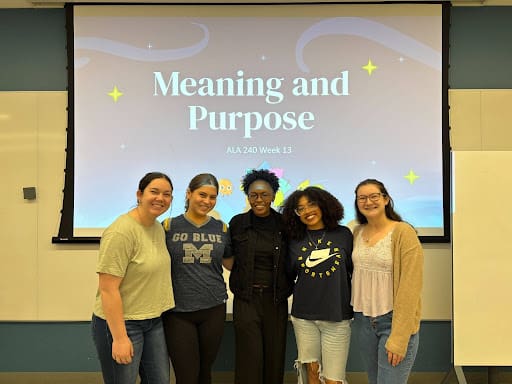
ALA 240 is designed for individuals to integrate research-based strategies that are not only critical for individuals, but also have a ripple effect on those around us: the community we live in and social change in the larger world. This course will focus on exploring leadership theory and wellness competencies alongside the eight dimensions of well-being and how these intersect with college public health concerns and campus culture, such as alcohol, cannabis, and other drugs, loneliness, mental health, health equity, and Student Life's core values of diversity, equity, and inclusion. One weekly lecture introduces key theories and background for the week's focus, with opportunities to connect with the instructional team and your peers. Discussion sessions function as a small-group lab where students translate ideas from lecture into action, applying concepts to everyday, real-life scenarios. Through lecture, dialogue, activities, and readings, the class functions as a lab where students explore holistic well-being, build community, and develop practical skills in emotional intelligence, resilience, empathy, mindfulness, communication, and decision-making for themselves and their communities. Any questions? Please email: [email protected]
Competencies: Authenticity, Building Relationships, Empathy, Resilience, Self-Awareness
Semester: Fall, Winter
Audience: Undergraduates
What is leadership? What is followership? The two are closely intertwined, but how and when do you choose to lead or follow? What are the necessary skills to be effective in either role? Grappling with and answering these questions is essential for leadership. In this class, you will learn more about yourself and your values, understand that good followers make for good leaders, and begin practicing leadership long before you are entrusted with setting direction for a team. What Will Students Learn in the Foundations of Leadership Course? The course will help students: Test their capacity to critically analyze and evaluate leadership and followership dilemmas. Develop essential skills in leadership and followership through contemplative practices, crafting a personal leadership philosophy, and participating in deep reflections. Build a leadership and followership “toolkit” that’s based on your values, skills, abilities, visions, and personal style. Make habits that will foster continuous learning and development of your leadership and followership skills.
Competencies: Action, Authenticity, Building Relationships, Empathy, , Humility, Self-Awareness
Semester: Winter
Audience: Undergraduates
Leadership and Facilitation in Community Building is a course for undergraduates who facilitate a section of ALA 171: Making the Most of Michigan. Each ALA 471 class prepares facilitators for the weekly ALA 171 sessions and connects their facilitation experiences to their broader academic goals and campus involvement. Students in ALA 471 will deepen knowledge of the transition to college, goal setting, social identity development, professional networking tools, resources available on campus, and communication skills for leadership across differences. Through participation in ALA 471, students still develop the competencies indicated in the ALA 471 description on the M-LEAD website.
Competencies: Building Relationships, Facilitation, Self-Awareness
Semester: Fall, Winter
Audience: Undergraduates
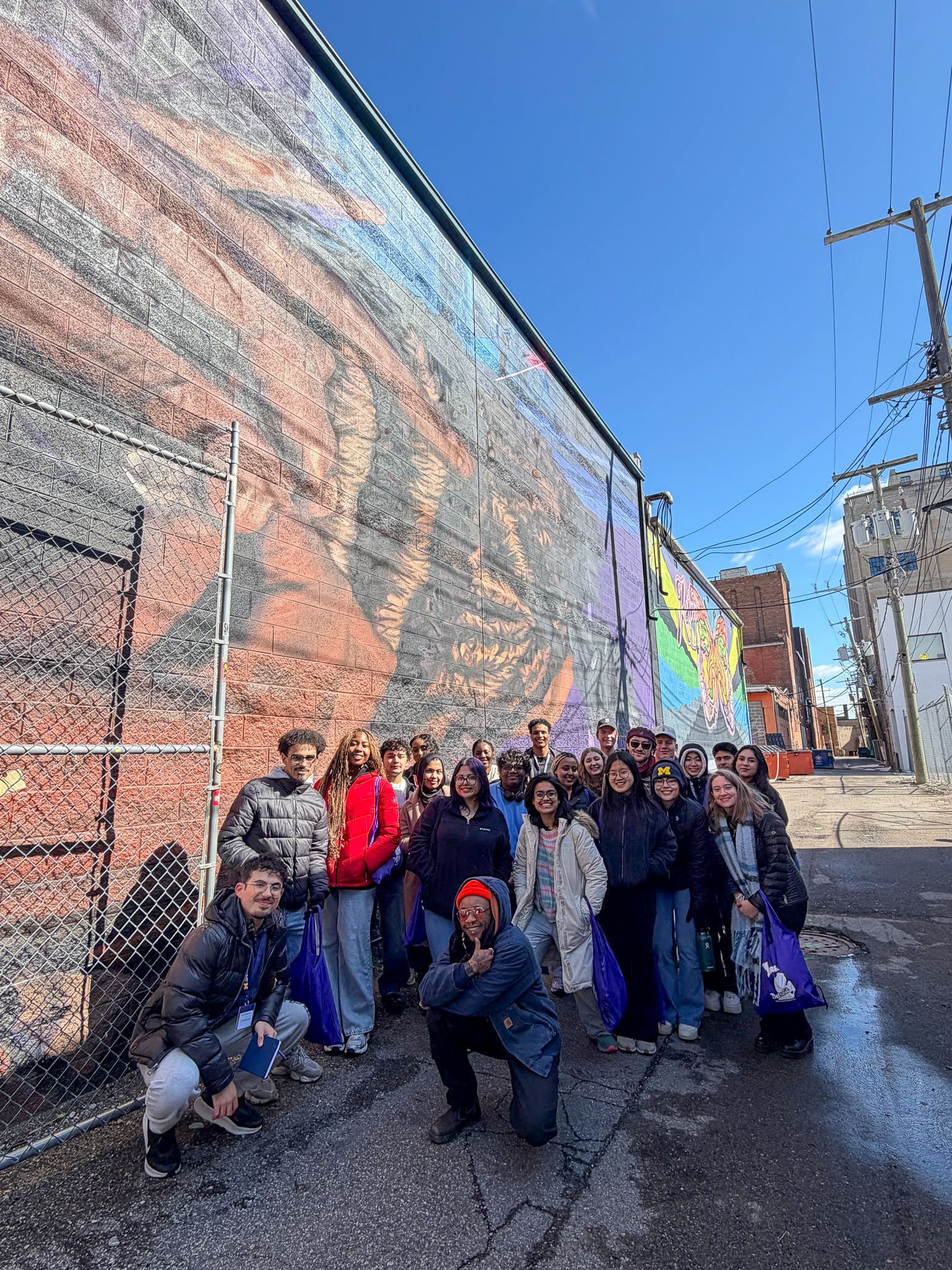
Students engage in the local community and culture through visits to iconic institutions, enjoying local food and connecting with alumni panelists and community leaders at a variety of events. Themes change every year and are selected from the BLI's big questions. Food, lodging, and transportation are provided by the BLI.
Competencies: Action, Building Relationships, Meaning-Making
Semester: Winter
Audience: Undergraduates
Join the Barger Leadership Institute (BLI) in exploring Mindful Mindset concepts and practices through meditation, journaling, creative practices, and movement over fall break at a peaceful setting on Lake Michigan.
Competencies: Authenticity, Empathy, Humility, Meaning-Making, Resilience, Self-Awareness
Semester: Fall
Audience: Undergraduates
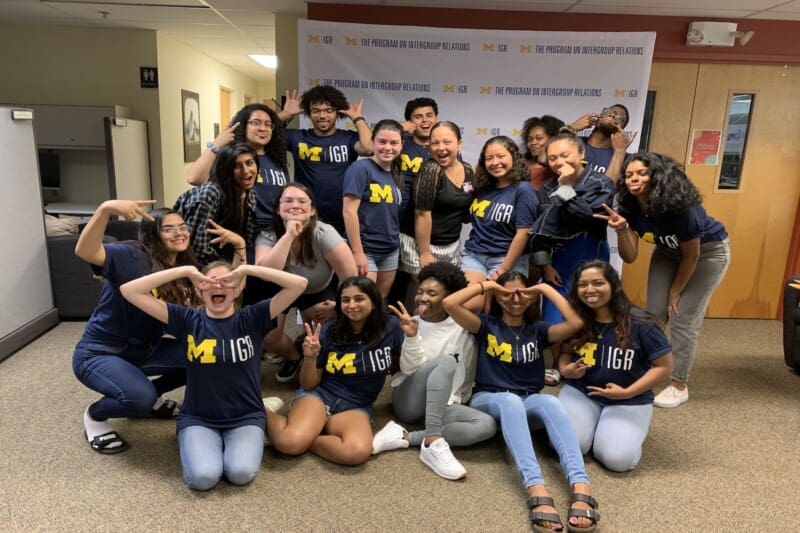
A large group of University of Michigan students posing and smiling together, many wearing navy blue IGR t-shirts, in front of a "Program on Intergroup Relations" branded backdrop.
CommonGround, a co-curricular, student-managed program within IGR, provides workshops for groups of UM students (student organizations, courses, etc.) by request. The workshops aim to raise awareness about social identities, power, privilege, and oppression. CommonGround prepares undergraduate and graduate students to create and facilitate these interactive workshops.
Competencies: Adaptability, Building Relationships, Empathy, Facilitation, , Self-Awareness
Semester: Fall, Spring, Summer, Winter
Audience: All Students, Graduate Students, Student Organizations, Undergraduates
The Ginsberg Center for Community Service and Learning offers a year-long fellowship for University of Michigan undergraduate juniors and seniors. The Community Engagement Leadership Fellows program seeks to provide students an opportunity to expand their existing knowledge, skills, and leadership experiences around community engagement, and apply these in the development of a project that directly addresses campus and community impact areas.
Competencies: Action, Adaptability, Empathy, Meaning-Making, Self-Awareness
Semester: Fall, Winter
Audience: Undergraduates
The Emerging Leaders Conference is an educational experience for undergraduate students in Fraternity and Sorority Life, that supports and develops students' personal and leadership skills. Participants focus on what it means to be a leader in the fraternity and sorority community, developing competencies in effective relationship building, building self-awareness, meaning-making, and more. Departments from across the University of Michigan design and present workshops tailored for the fraternity and sorority community in order to support participant's personal and leadership development while connecting them with resources at the university.
Competencies: Action, Building Relationships, Meaning-Making, Self-Awareness
Semester: Fall
Audience: Undergraduates
The Ginsberg Center for Community Service and Learning offers a year-long paid opportunity for University of Michigan graduate students called the Graduate Consultant Program. Open to PhD students across disciplines, Ginsberg's Graduate Consultant Program trains you for one of two roles: Engaged Learning Consultants and Community Partnership Consultants. All Graduate Consultants help broaden the Ginsberg Center’s capacity to support our academic partners (faculty, staff, and GSIs) and our community partners. They also deepen their learning by joining a community of practice centered around equitable community engagement. Graduate Consultants learn and apply best practices, cultivate their leadership skills, form relationships with other students, academic, and community partners, and contribute to the Center's mission to support equitable campus-community partnerships in service to the public good.
Competencies: Adaptability, Building Relationships, Empathy, Facilitation, , Meaning-Making, Self-Awareness
Semester: Fall, Spring, Summer, Winter
Audience: Graduate Students
Image with two logos and rainbow blended background.
Sponsored by Rackham and M-LEAD with partnership from leadership educators from across the Michigan Leadership Collaborative is a series on inclusive leadership. Graduate and professional students at U of M have the opportunity to attend one or all ten workshops in this summer series.
Competencies: Authenticity, Building Relationships, Empathy, Meaning-Making, Self-Awareness
Semester: Summer
Audience: Graduate Students
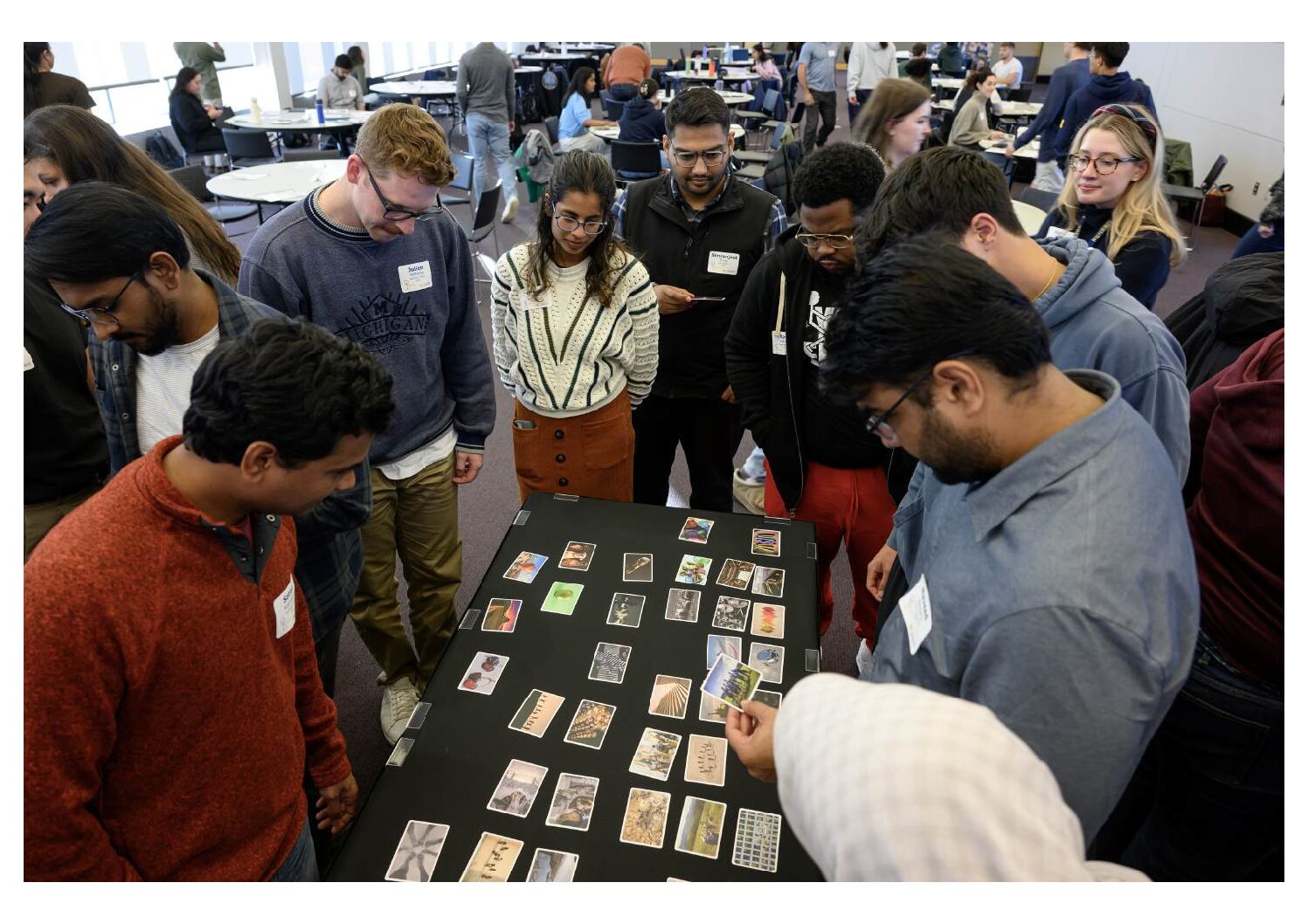
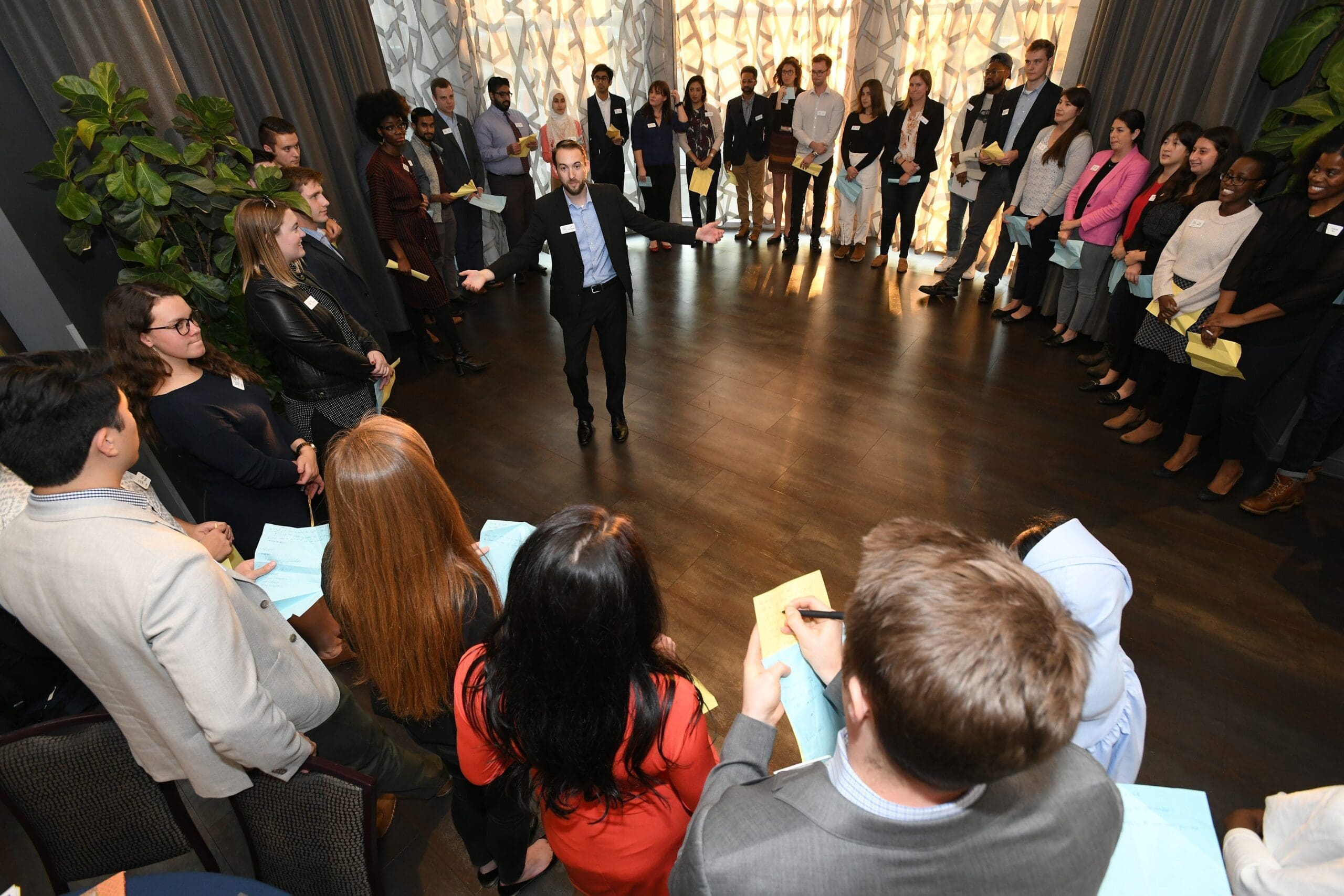
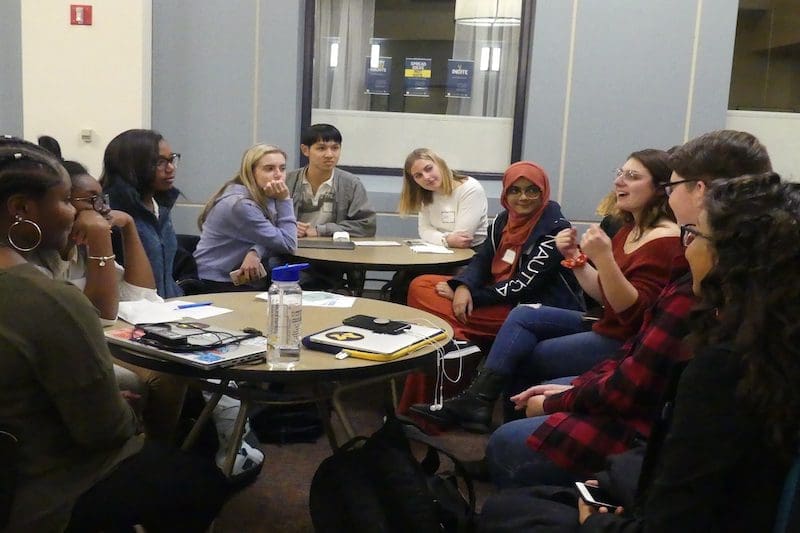
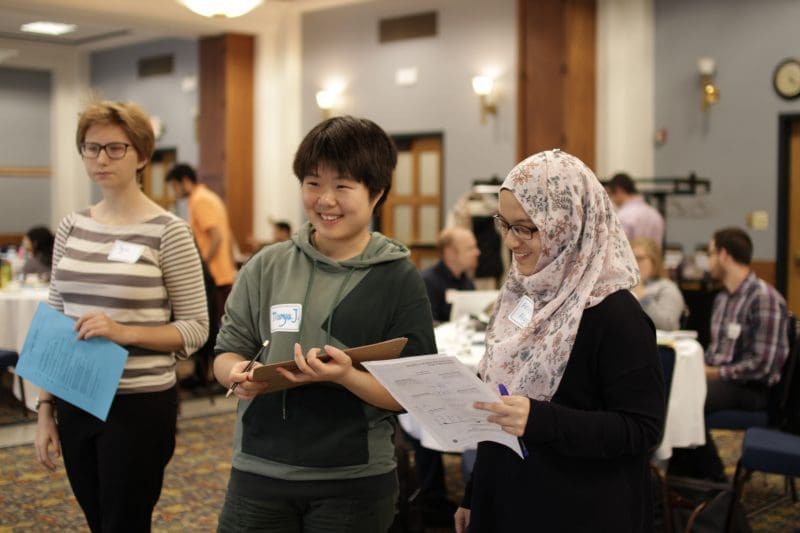
Students at ILS comparing notes during an activity.
The Intercultural Leadership Seminar (ILS), offered by the International Center, is designed for students who want to become effective leaders in a global environment. Attendees will gain knowledge of how cultural values affect our communication, leadership, and interpersonal behaviors. ILS includes lectures, discussions, experiential activities, and small group work.
Competencies: Adaptability, Authenticity, Building Relationships, Empathy, , Meaning-Making, Resilience, Self-Awareness, Vision
Semester: Fall, Winter
Audience: All Students, Graduate Students, Undergraduates

The Michigan LeaderShape® Institute is an ethics-based leadership development experience for University of Michigan students. Students will participate in seminars, small group discussions, and personal reflection on values and how to implement them at the forefront of their leadership.

Designed to be an interactive, energizing, and unique experience that supports and enhances perceptions and practice of leadership, it is 5 days of non-stop self-discovery and learning from practical experiences that build leadership concepts and abilities, culminating in developing a vision for a better world and laying out the initial steps to make it happen. Participants spend the week at Camp Michigania in Boyne City, Michigan exploring multiple aspects of leadership and getting to know a diverse and dynamic group of fellow students and facilitators. Each student is a unique contributor and leaves feeling energized and more confident to assume leadership in any context.

LeaderShape® offers a unique opportunity for personal growth, self-awareness, and a deeper understanding of the student's role as a responsible citizen on this campus, and in the community and society as a whole. Students will be able to participate in optional Camp Michigania activities like snow shoeing, sledding, and arts and crafts (Activities will be weather and staffing dependent). Food, travel, and lodging are provided. This retreat is 100% free for participants.

Application is required for consideration in the program. 2026 Applications are currently closed. Applications will open again in the fall of 2026. Applications are reviewed on a rolling basis until the program reaches capacity. Once full, additional applicants will be placed on a waitlist.

Want to learn more about LeaderShape? Below is some recent news about the leadership program:
Competencies: Building Relationships, Empathy, Self-Awareness, Vision
Semester: Spring
Audience: Graduate Students, Undergraduates
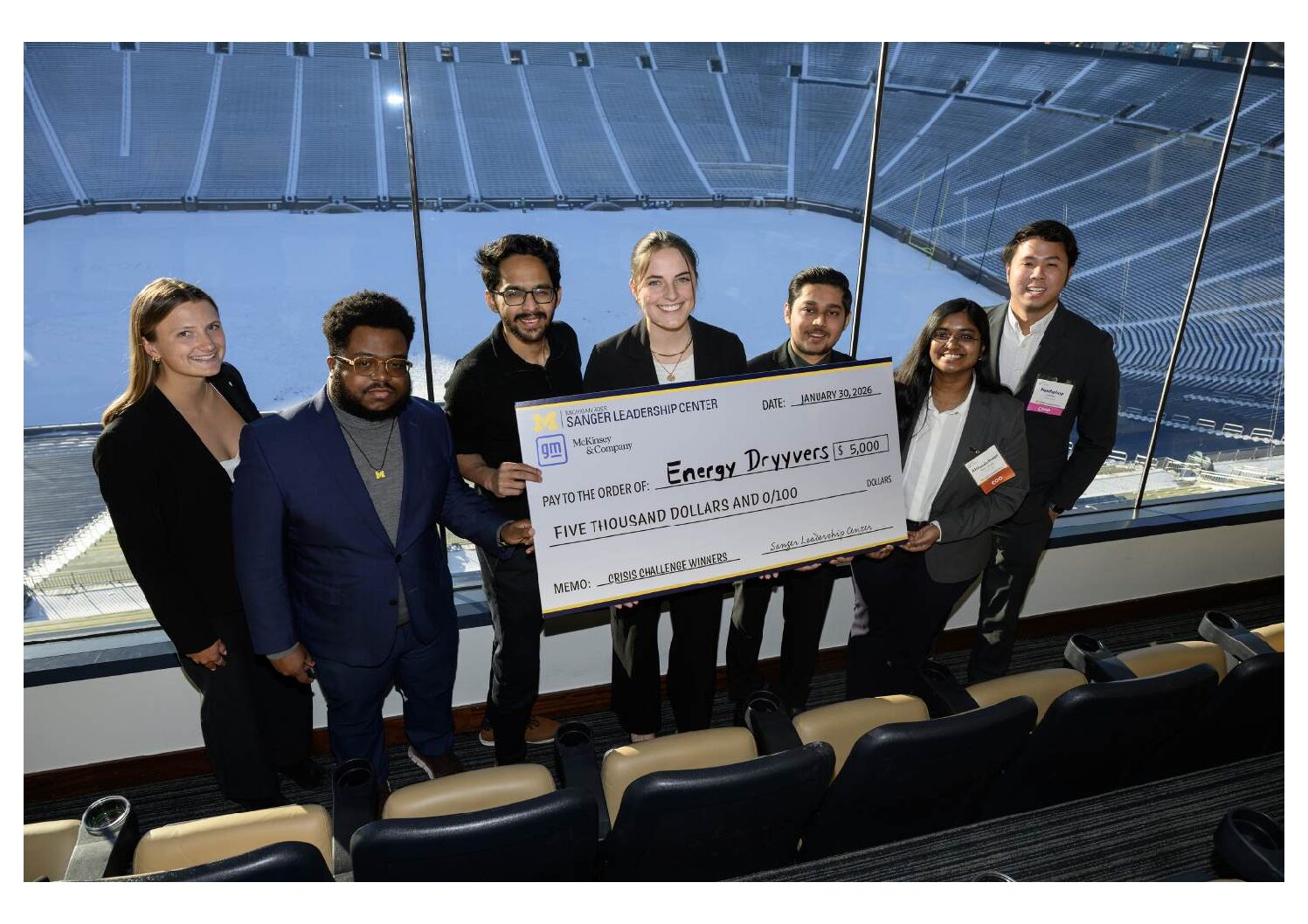
The Sanger Leadership Center’s Leadership Crisis Challenge prepares you to lead in high-pressure, high-stakes environments. You will be immersed in a simulated business and media crisis where you will test your ability to strategize through extreme turbulence, think on your feet, and demonstrate poise under pressure. You and your team will play the part of senior executives tasked with responding to the crisis as it unfolds: you’ll receive emails, social media updates, phone calls, and more throughout Thursday night. Then, on Friday, you’ll come to Michigan Stadium to present your strategy to your board of directors (made up of esteemed U-M alums), journalists, and the public. Along the way, you’ll receive personalized feedback from business leaders, communication coaches, and faculty experts. This program is generously sponsored by General Motors and McKinsey.
Competencies: Influence, Resilience, Team Communication, Team Flexibility, Team Role Clarity
Semester: Winter
Audience: All Students
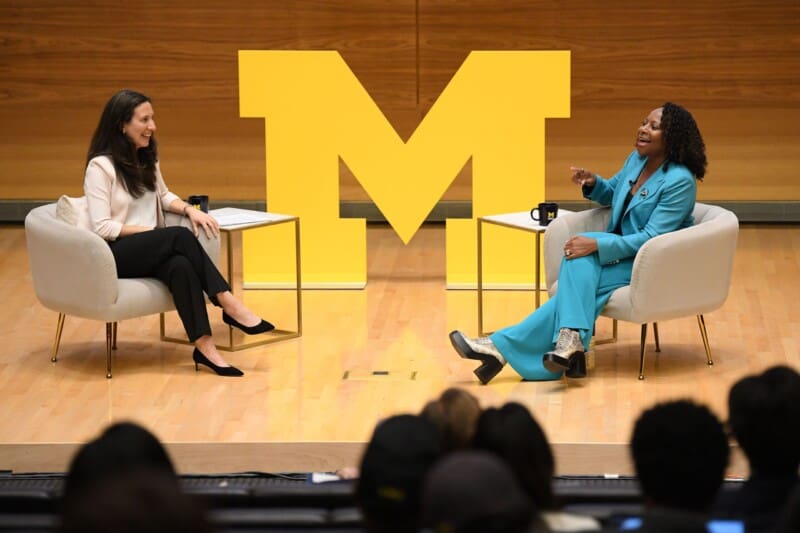
A stage in the Ross building with a yellow "M" logo in the background and two women speaking in a panel.
The Leadership Dialogues speaker series, powered by the Sanger Leadership Center, is a fireside chat-style event featuring accomplished industry and non-profit leaders discussing the latest ideas in organizational research and ongoing practice with U-M faculty. Speakers share advice on topics including how to develop leadership skills, lead purpose-driven organizations, and manage crises. All dialogues are free and open to the entire U-M community.
Semester: Fall, Winter
Audience: All Students
The Barger Leadership Institute's (BLI) Leadership Teaching Fellows (LTF) earn money and receive ongoing coaching on their professional identity and facilitation skills. They lead the BLI's ALA courses and work to mentor and motivate students to explore and develop their leadership identities.
Competencies: Adaptability, Facilitation,
Semester: Fall, Winter
Audience: Undergraduates
Legacy Lab, powered by the Sanger Leadership Center, is designed to help you reflect on your core values and purpose and explore the impact you want to have as a leader. Through this program, you’ll engage in reflective activities, experiment with new ways of interacting and leading, and build meaningful connections with your peers. You’ll also participate in a group coaching session to deepen reflection and learning. By the end, you’ll emerge as a stronger, more intentional leader poised to create a lasting legacy.
Competencies: Curiosity, Integrity, Meaning-Making, Resilience, Self-Awareness
Semester: Fall, Winter
Audience: All Students
Are you a student organization leader looking to connect with fellow leaders, build community, and strengthen your leadership skills? If so, we'd like to invite you to register for the Center for Campus Involvement's OrgLead program! OrgLead is an annual cohort-based leadership development program for student organization leaders to help you develop your leadership skills by focusing on navigating group dynamics, leading effective teams, and empowering you to go above and beyond in your organization. Along the way, you'll build a sustainable community of support with other student organization leaders. OrgLead content aligns with the University of Michigan's M-LEAD competencies listed below and counts toward the M-LEAD Leadership Certificate: ● Communication: Adaptability, Facilitation, Feedback ● Organizational Change: Action, Building Relationships, Vision ● Reflection: Authenticity, Meaning Making, Self Awareness ● Emotional Intelligence: Empathy, Humility, Resilience. The application for the 2026 - 2027 school year will be opening on August 24th and will be open for 2 weeks, closing on September 14th. You can click below to learn more about this year’s session topics, requirements, and incentives for completing the program.
Competencies: Action, Building Relationships, Meaning-Making
Semester: Fall, Winter
Audience: All Students
Planet Blue Student Leaders (PBSLs) are part-time employees of Student Life who act as peer educators to promote sustainable living behaviors and work in small teams to implement year-long projects that support campus sustainability goals. Throughout the year, PBSLs participate in weekly programs to develop leadership skills and build the capacity of diverse, interdisciplinary project teams. PBSLs are hired for a September-April job and expected to work 5-10 hours weekly. Fall term focuses on building an environmental and social justice vocabulary and values and growing the network of sustainability agents across campus. PBSLs build off this knowledge in the winter term, as they work in small teams on a project to promote a culture of sustainability among their peers. If you’re looking for a beginning-to-intermediate level opportunity to develop leadership in sustainability at U-M, the PBSL program might be a good fit for you! Applications open for the 2020-21 team on Friday, March 20 and close on Sunday, May 31.
Competencies: Action, Adaptability, Building Relationships, Facilitation, , Humility, Resilience, Self-Awareness
Semester: Fall, Winter
Audience: All Students, Graduate Students, Undergraduates
The Ross Leaders Academy (RLA) is the Sanger Leadership Center’s premier leadership development community for select students across campus. During the year-long program, you’ll make leadership development a primary focus of your Michigan experience. You’ll learn from diverse peers, receive 1:1 and group coaching, and engage with 50+ years of robust research advanced by the University of Michigan’s innovative faculty. You’ll emerge from RLA more confident, insightful, and with a vision to fuel your emerging career. This program is generously sponsored by the Deloitte Foundation.
Competencies: Building Relationships, Curiosity, Empathy, Influence, Integrity, Resilience, Team Inclusion
Semester: Fall, Spring, Winter
Audience: All Students
A SAPAC program Co-Coordinator is a paid, year long appointment in which you will take on the co-coordination and leadership of one of our student volunteer programs (CORE, BICE, SEAS). Co-Coordinators are selected based on knowledge, experience, commitment, passion and a desire for leadership, learning and growth. SAPAC Co-Coordinators plan and facilitate weekly program meetings, conduct office hours and participate in weekly leadership development and skill building as a cohort.
Competencies: Action, Building Relationships, Empathy, Facilitation, , Self-Awareness
Semester: Fall, Winter
Audience: All Students, Graduate Students, Undergraduates
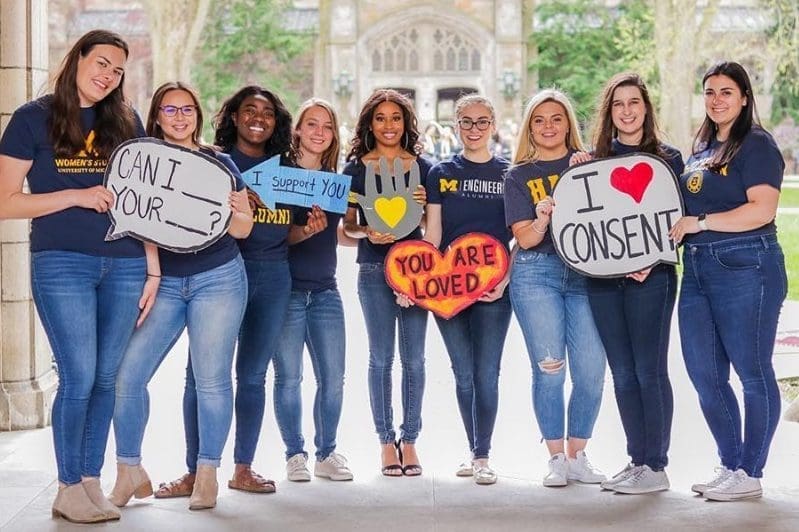
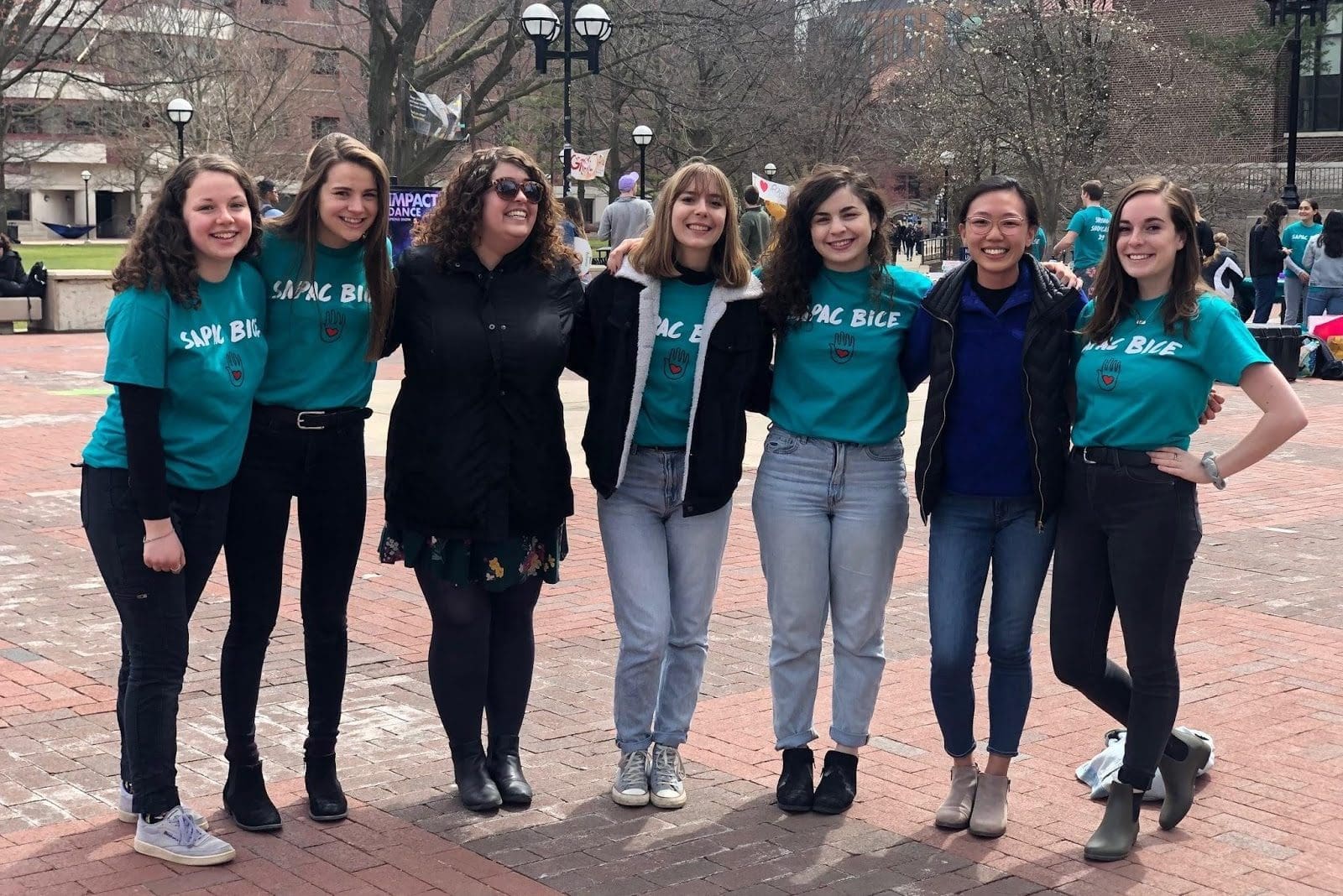
Becoming a SAPAC student volunteer is a commitment to developing, producing and leading sexual violence prevention education for all students across U of M's campus. As a SAPAC volunteer, you get to select which student volunteer program you would like to be a part of and participate in the planning, leading and facilitation of campus wide events and peer-to-peer workshops. SAPAC student volunteer programs include: CORE (Consent, Outreach and Relationship Education), BICE (Bystander Intervention and Community Engagement) and SEAS (Survivor Empowerment and Ally Support).
Competencies: Action, Building Relationships, Empathy, Facilitation, Self-Awareness
Semester: Fall, Winter
Audience: All Students, Graduate Students, Undergraduates
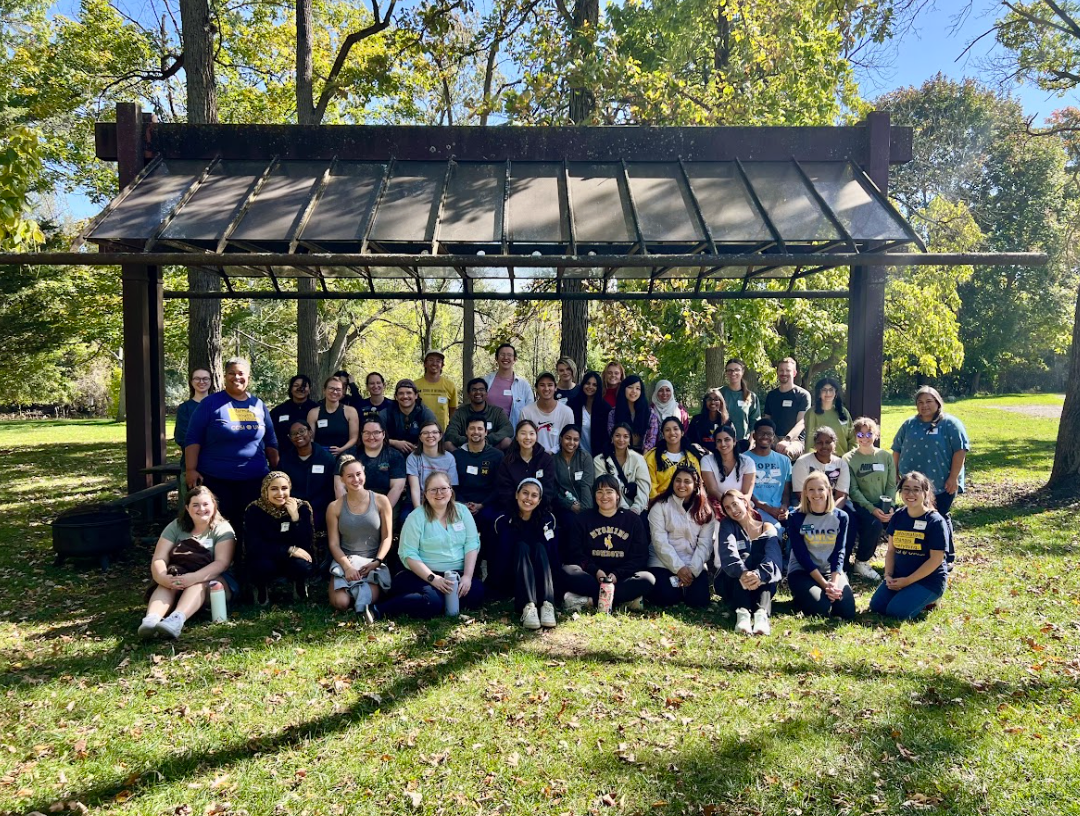
A large group of students and facilitators posing together outdoors under a wooden pergola structure surrounded by autumn trees, wearing name tags at an inclusive leadership retreat.
The Inclusive Leaders in Information program equips student leaders with the skills to encourage participation among their peers in the information science field. It is one of multiple Student Life leadership initiatives available at UMSI. For more information about this program contact [email protected].
Competencies: Adaptability, Building Relationships, Empathy, Self-Awareness
Semester: Fall, Winter
Audience: All Students, Graduate Students, Undergraduates
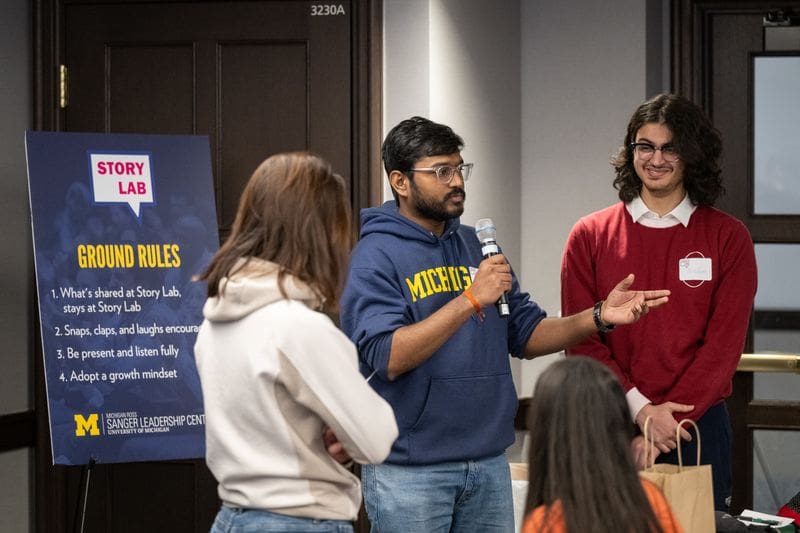
Story Lab, powered by the Sanger Leadership Center, develops executive-level presence and communication skills through storytelling workshops and events. To be an effective leader—at work, in the community, or in your personal life—you must be able to communicate with impact. Often this means telling stories that are meaningful to you and others, and doing so in the rich language and expressive style of a seasoned storyteller. If you can craft and deliver an effective story, you will be better able to convey your value to recruiters, inspire and motivate classmates and colleagues, and influence your audience. At Story Lab, you’ll find an immersive experience and an opportunity to hone your skills in a safe and supportive environment. Story Lab is supported in part by M-LEAD and the Ford School’s Leadership Initiative.
Competencies: Curiosity, Influence, Team Communication, Team Inclusion, Team Inspiration
Semester: Fall, Winter
Audience: All Students
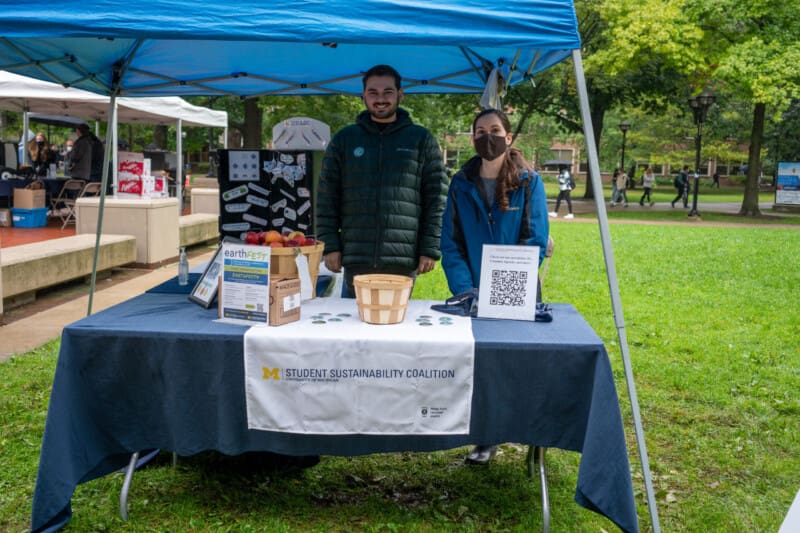
Two University of Michigan students staffing a Student Sustainability Coalition table at an outdoor campus event, with EarthFest materials, a basket of apples, and a QR code sign displayed on the table.
The Student Sustainability Coalition (SSC) aims to promote a sustainable campus culture at the University of Michigan by bringing people together to achieve social and environmental change. SSC is not a club or member organization—rather, it is a small group of students who work closely with the Graham Sustainability Institute, the Office of Campus Sustainability, Student Life, and the many student organizations on campus to advance a common agenda of sustainability at U-M. To that end, they build connections, foster new partnerships, and amplify initiatives already underway. Learn more by subscribing to their newsletter.
Competencies: Action, Building Relationships, Facilitation, , Vision
Semester: Fall, Spring, Summer, Winter
Audience: All Students
The UM Sustainable Food Program (UMSFP) fosters collaborative leadership that empowers students to create a sustainable food system at the University of Michigan while becoming change agents for a vibrant planet. UMSFP Leadership Team members work 5-10 hours weekly supporting a network of 15+ food system sustainability student organizations on campus, growing living-learning lab food justice programs on campus, and nurturing collaborations with the Campus Farm and Maize and Blue Cupboard.Throughout the year, Leadership Team members participate in weekly programs to develop leadership skills and build the capacity of student-led sustainable food system initiatives on campus. Leadership Team members are hired for a September-April job and expected to work 5-10 hours weekly.
Competencies: Action, Authenticity, Building Relationships, Empathy, Facilitation
Semester: Fall, Spring, Summer, Winter
Audience: All Students